
Checking Criminal History in Wakulla County
Start a Wakulla County criminal history search by deciding whether the goal is to read a filed court case, locate a recent booking, obtain an incident report, review a Florida repository record, or confirm state custody. The Wakulla Clerk court-record portal is the main local case index. Search by a party name or case number, narrow by date or case type, and open the docket before drawing a conclusion. A name, date of birth, spelling variants, and an approximate event date help distinguish people with similar names.
Match the source to the event. WCSO holds its reports and jail records. The Clerk holds documents filed in Circuit or County Court. FDLE joins reported Florida arrest and disposition cycles. FDC tracks people in state prison or state supervision. Each system has a different update schedule, access rule, and definition of a result.
- Search the Clerk portal for filed Wakulla County criminal cases and record the case number.
- Check WCSO corrections when the question concerns current county custody or a recent booking.
- Compare names, birth information, agencies, event dates, and charge-level dispositions.
- Request the exact report from the arresting agency or the exact filed document from the Clerk.
- Use FDLE or a fingerprint-based personal review when an official statewide product is needed.
Wakulla County Clerk Portal Fields
The Clerk gateway is more than a name box. Its controls support party-name and case-number searches, date limits, and case-type filters. Search results may show a case number, party name, filing date, status, court division, and charge information. The docket then supplies the filing sequence and any public document images. Some older or restricted images require a call or counter request.
The official Clerk home page shows the local starting point for court services.
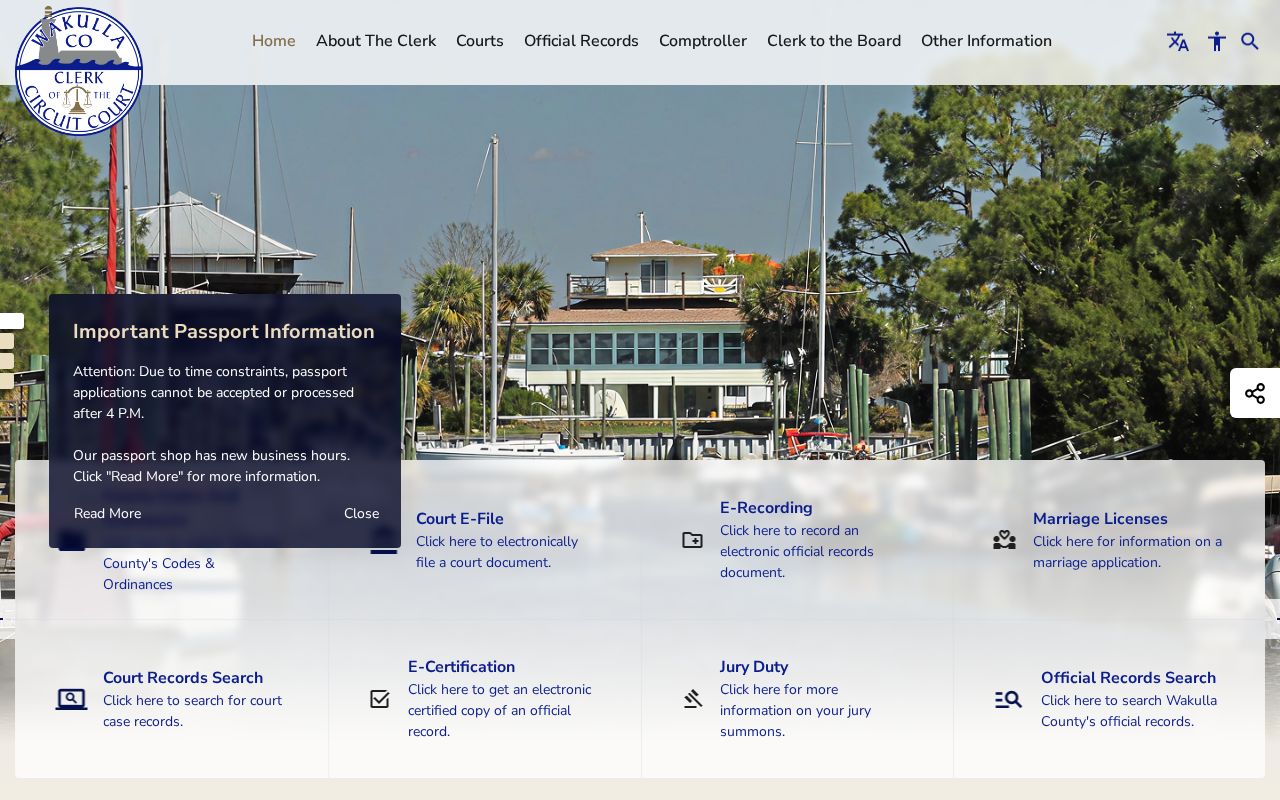
This Clerk view connects a Wakulla County criminal history search to the office that can explain docket access, copies, certification, and archived retrieval.
| Search control | Best use | Reading tip |
|---|---|---|
| Party name | Finding cases without a number | Try spelling and middle-name variants. |
| Case number | Opening a known Wakulla file | Use the full number when available. |
| Date range | Separating similar results | Do not confuse booking and filing dates. |
| Case type | Limiting criminal results | Felony, misdemeanor, juvenile, and traffic access differ. |
Florida Official Background Checks
The Florida Department of Law Enforcement maintains the state criminal-history repository. Its public Criminal History Information Network name search costs $24 plus the stated $1 credit-card processing fee. A no-hit search still uses the fee. The product covers information reported to FDLE by Florida agencies, but a name match does not confirm identity by fingerprint and may not include sealed, expunged, exempt, or not-yet-reported material.
For personal review, a person can request a fingerprint-based Florida record and challenge errors through FDLE. WCSO offers appointment-only Livescan capture through ACCESS; the requesting authority supplies the purpose and ORI, and fees vary by purpose. The FBI Identity History Summary is also subject-only and requires fingerprints. These options answer different questions from a Wakulla County court docket.
The FDLE criminal-history overview lays out the available Florida products.
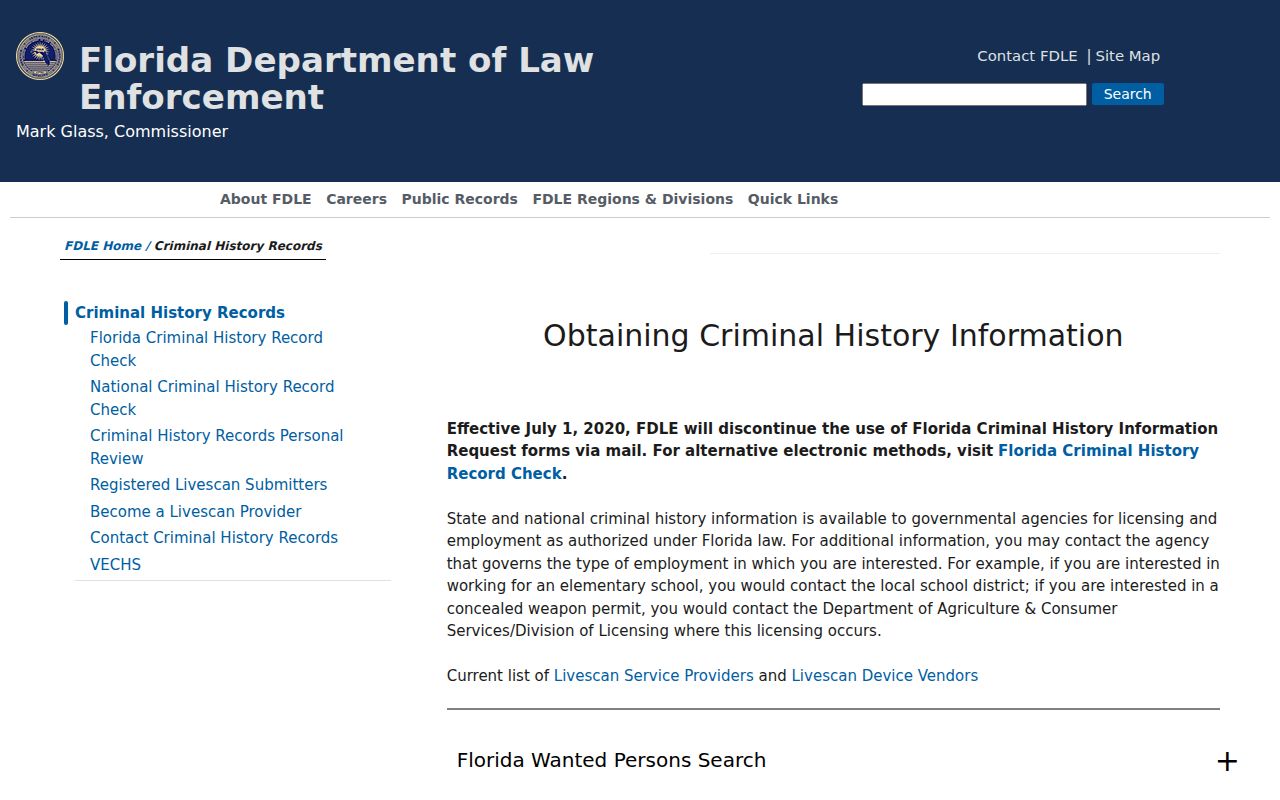
This state overview helps a Wakulla County searcher choose between public name access, personal review, and fingerprint-based routes.
WCSO Criminal Records and Report Requests
The Wakulla County Sheriff's Office separates criminal-record questions from report-copy requests. Criminal Records can be reached at 850-745-7140, while incident and arrest report copies use 850-745-7142. The public-records custodian accepts requests at 15 Oak Street, Crawfordville, Florida 32327, or by phone at 850-745-7135. Giving a name, event date, location, report number, record type, and preferred format reduces back-and-forth.
WCSO lists ordinary paper copies at 15 cents per single-sided page or 20 cents per double-sided page. Certified copies add $1 per document. Actual duplication and mailing costs may apply, and a labor charge is possible when a request requires extensive staff or technology use. A new report may not be released until a supervisor approves it, and exempt details must be redacted.
The WCSO official site is the agency gateway for records, corrections, and service information.
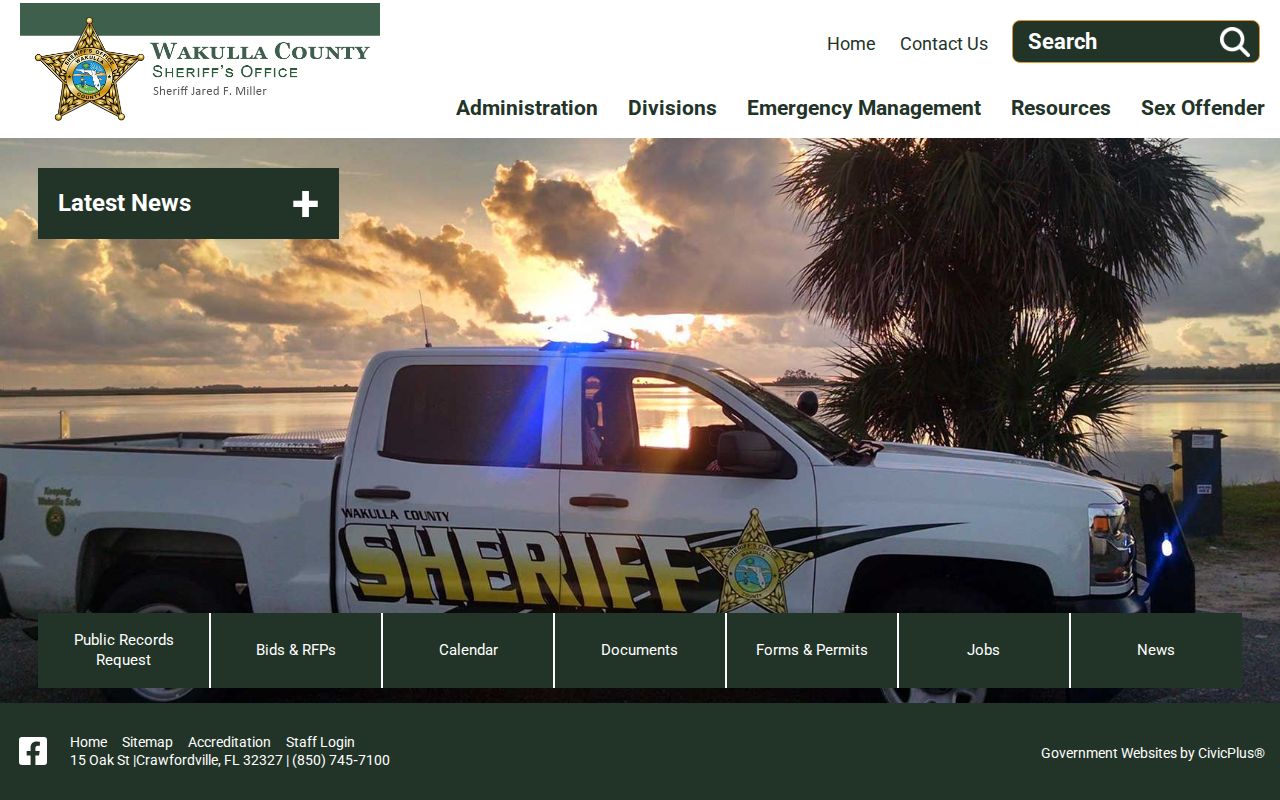
The sheriff's navigation is the right route for WCSO-created reports, while filed court documents remain with the Clerk.
| Plain single-sided copy | 15 cents per page |
|---|---|
| Plain double-sided copy | 20 cents per page |
| Certification | $1 per certified document |
| Large request | Actual costs and an extensive-use labor charge may apply |
Criminal Record Types
One Wakulla County event can produce several records, each with its own custodian. An investigating agency writes the incident or arrest report. WCSO creates a booking record when a person enters the county jail. The Clerk maintains pleadings, orders, minutes, judgments, and sentences filed in court. FDLE assembles reported statewide arrest and disposition cycles. FDC maintains state custody and supervision information.
A registry entry, warrant return, and probation record serve narrower purposes. They should not be read as substitutes for the full Wakulla County criminal history. A registry profile covers statutory registration data, for example, while a docket records how a prosecution moved through court.
- Incident and arrest reports describe the agency's event and probable-cause account.
- Booking records document jail intake, custody, charges, and bond data.
- Court case files contain filed charges, motions, rulings, outcomes, and sentences.
- FDLE criminal history connects Florida arrest cycles with reported dispositions.
- Custody and registry records show specialized state supervision or registration information.
Wakulla County Jail Is Not State Prison
WCSO runs the county detention function at the 15 Oak Street complex. Its corrections page is the starting point for current local custody. Wakulla Correctional Institution, despite the shared county name, is a Florida Department of Corrections prison and uses the FDC Corrections Offender Network. Mixing the two searches is a common reason a person appears to be missing.
A county result may display a booking number and date, custody status, arresting agency, charges, bond, release information, and limited identifiers. It does not establish the final court outcome. If a person leaves the current roster, check release or transfer information before assuming why. Florida VINE may provide notifications, while the federal BOP locator covers federal prison custody, not the Wakulla jail.
The FDC Offender Search is the official state custody and supervision route.
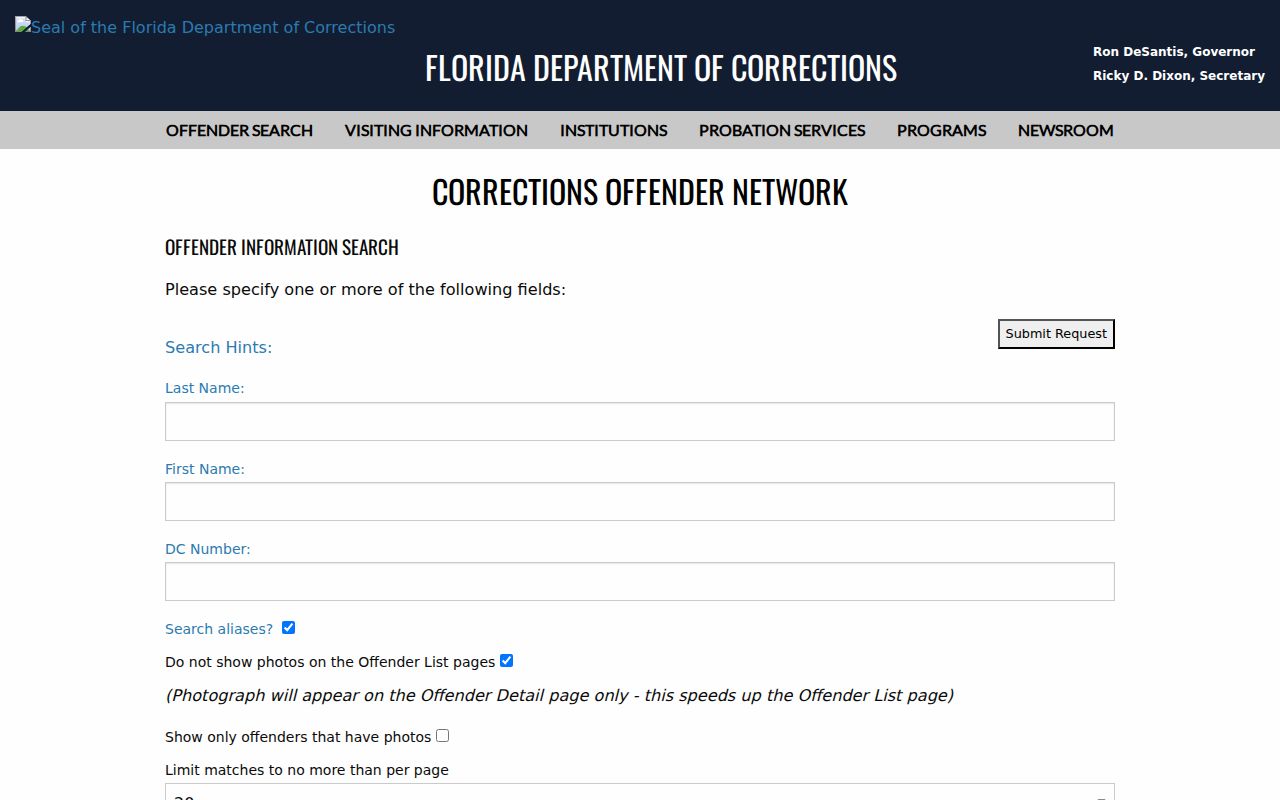
This statewide locator complements, but does not replace, WCSO's local booking and current-custody information.
Inside a Wakulla County Criminal Record
The contents depend on the source. An FDLE record can associate names and aliases, demographic descriptors, transaction identifiers, arrest dates, agencies, charges, and reported dispositions. A Wakulla County docket often supplies better procedural detail, such as filings, hearings, pleas, orders, judgment, and sentence. A report supplies narrative facts, while a jail entry focuses on custody. Compare them at the event and charge level.
| Name & Identifiers | Legal name, aliases, birth details, descriptors, and agency identifiers used to compare a result. |
|---|---|
| Arrest / Booking Data | Arresting agency, event date, intake date, booking number, charges, and bond information when public. |
| Charges & Statutes | Alleged or filed offenses and the Florida provisions tied to each charge. |
| Disposition | Charge-level outcome such as dismissal, plea, acquittal, or adjudication. |
| Sentence | Publicly filed incarceration, probation, fines, or other court-ordered terms. |
| Custody / Supervision Status | County custody, FDC incarceration, release, or state community supervision when reported. |
Felony and Misdemeanor Paths in Wakulla
Wakulla County is part of Florida's Second Judicial Circuit. Circuit Court hears felonies and related post-judgment matters. Wakulla County Court hears misdemeanors and criminal traffic. The Clerk's criminal divisions open files, docket filings, maintain calendars and minutes, collect court-ordered money, and provide public copies as allowed.
The court file normally begins after arrest or notice to appear and prosecutor review. Arraignment records the plea, followed by discovery, motions, pretrial hearings, a negotiated plea or trial, disposition, and sentence. An arrest charge can be reduced, replaced, enhanced, or declined. That is why the booking date, prosecutor filing date, and disposition date must not be treated as one date.
Public Access Laws in Florida
Florida's Constitution and public-records statutes favor inspection and copying, but access is not unlimited. A Wakulla County custodian must apply specific exemptions and redact protected portions when the remainder can be produced. Court confidentiality follows Florida Rule of General Practice and Judicial Administration 2.420, which can produce a different access result from a related sheriff record.
Key Statutes:
Florida Statutes § 119.07 explains inspection, copying, exemptions, and public-record charges.
Florida Statutes § 943.053 governs dissemination of criminal-history information by FDLE.
Florida Statutes § 943.056 provides a process to review and challenge a Florida criminal-history record.
Florida Statutes § 943.0585 sets requirements and effects for court-ordered expunction.
Florida Statutes § 943.059 governs court-ordered sealing of criminal-history records.
Verify a Wakulla Warrant at Its Source
A stale web reference is not enough to confirm an active warrant. FDLE's Public Access System provides a statewide wanted-person search, but FDLE warns that records may be delayed or may remain after service or withdrawal. Search with available identifiers, note the originating agency and warrant details, and then confirm through that agency or WCSO. Court-issued bench-warrant information may also appear in the Clerk docket.
Someone resolving their own possible warrant should contact a lawyer or the issuing court rather than testing the result through an encounter with law enforcement. Public visibility can also be limited when disclosure would interfere with an active investigation.
The FDLE wanted-person system supplies the statewide starting point.
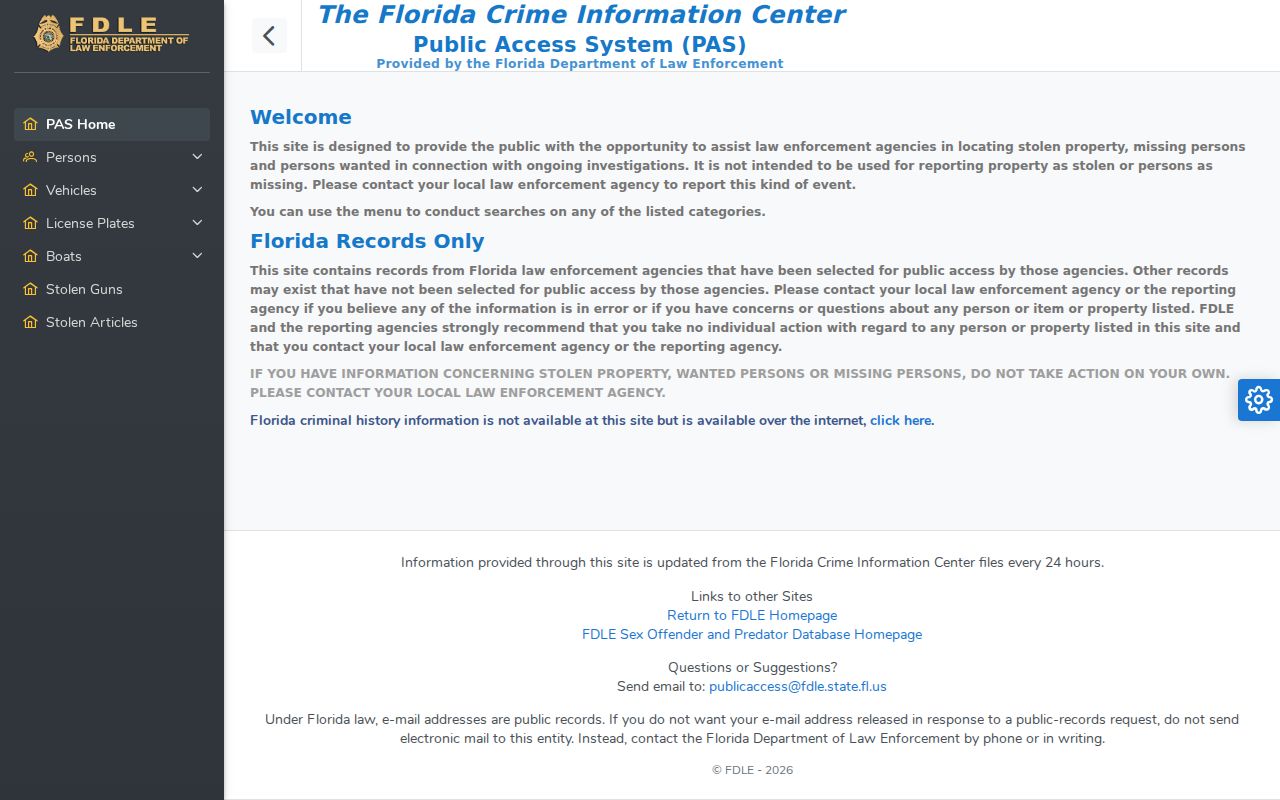
This search should lead to verification with the issuing source, not a conclusion based only on the statewide screen.
Sealed, Expunged, and Restricted Records
Juvenile material, sealed and expunged cases, victim and minor identifiers, financial and Social Security numbers, active-investigation details, and protected addresses can be absent or redacted. Sealing and expunction are different. A sealed record remains under restricted custody. An expunged record is generally destroyed by most agencies while FDLE retains a limited confidential copy, subject to statutory exceptions.
Florida's process begins with an FDLE Certificate of Eligibility application. Depending on the remedy, the packet can require fingerprints, a certified disposition, prosecutor certification, and the current FDLE fee. The certificate permits a petition but does not order relief. The petition then goes to the Wakulla court that handled the case, and the judge retains discretion. A dismissal by itself does not erase an arrest.
The FDLE seal and expunge process explains the state eligibility stage.
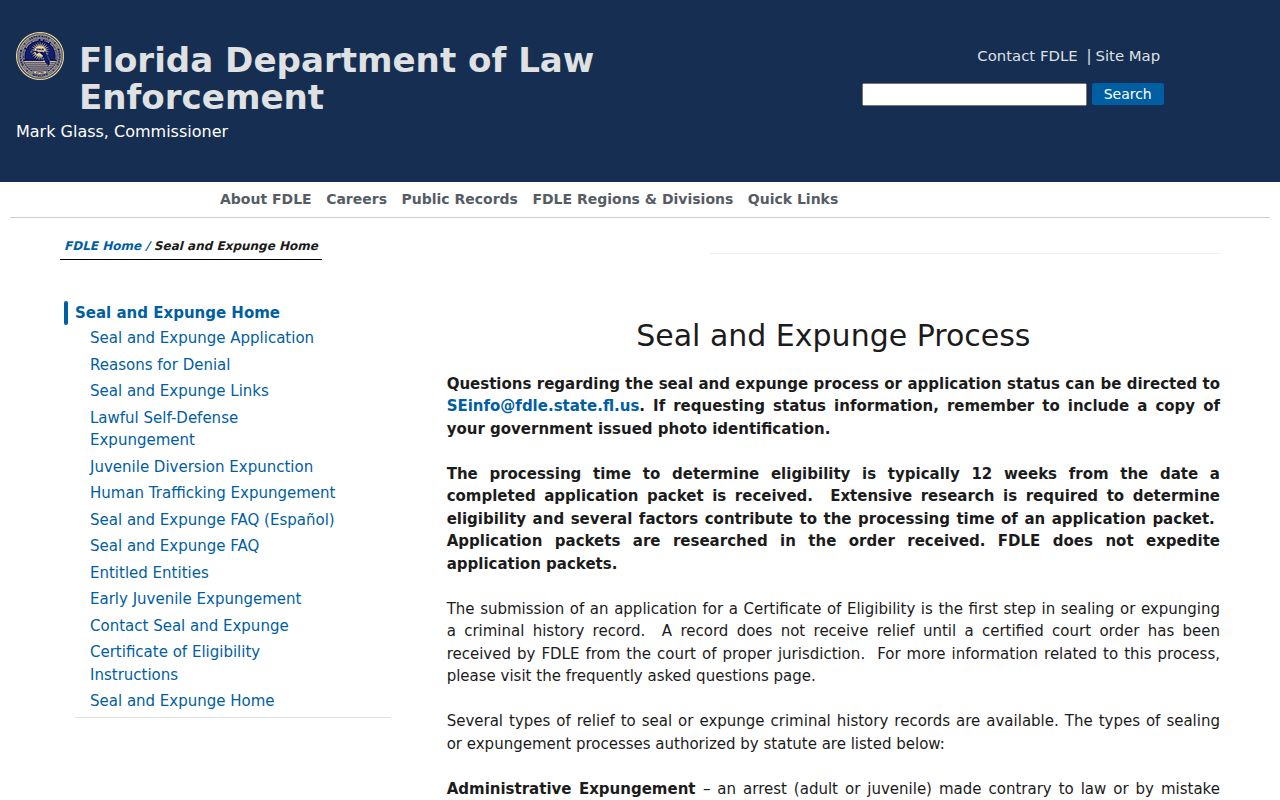
This state process precedes a Wakulla County petition and should be checked against current forms and statutes.
How Wakulla Arrest Data Reaches FDLE
A Wakulla County arrest can create four related products. The arresting agency writes the report and probable-cause material. WCSO creates a booking and custody record if the person enters the county jail. Fingerprints and event data begin a cycle at FDLE. If the prosecutor files a case, the Clerk opens and maintains the court file. Later dispositions must be reported back through the system.
Reporting and review do not happen at the same moment. A new jail entry may appear before a filed case, and a disposition may reach the repository after it appears on the docket. If the FDLE record is incorrect, section 943.056 provides review and correction. If it is accurate but legally eligible for relief, sealing or expunction uses a different process.
The FDLE paid name-search portal displays the public Florida repository entry point.
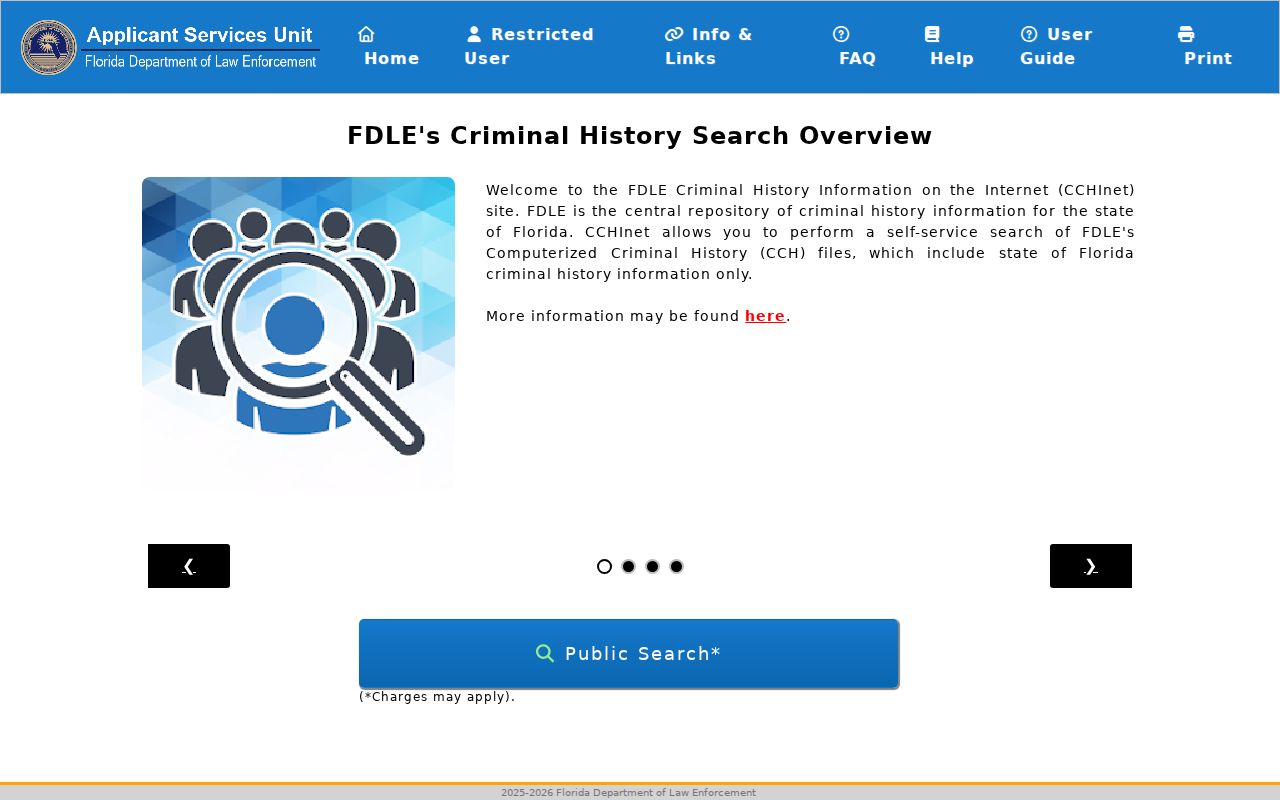
This name-based result should be compared with the Wakulla docket and source records because it is not fingerprint confirmation.
Second Circuit Offices Serving Wakulla
Wakulla's courthouse at 3056 Crawfordville Highway brings the Circuit Court, County Court, and Clerk criminal divisions into one local records route. The Clerk Courts Department is open from 8 a.m. to 4 p.m. on weekdays. Its published guidance says a person arriving by 4 p.m. with a same-day filing deadline should call from outside for accommodation. Free-parking references use the courthouse complex, Old Jail, and Old Courthouse as local landmarks.
Court copies cost $1 per page, searches cost $2 per name or case, and certification adds $2 per certification. Inactive files can be off site and may take a day or so to retrieve. A written Rule 2.420(f)(1) request should identify the records precisely. These court charges are separate from WCSO's report-copy schedule because each office holds a different record.
The Second Judicial Circuit site provides the circuit-wide court context.
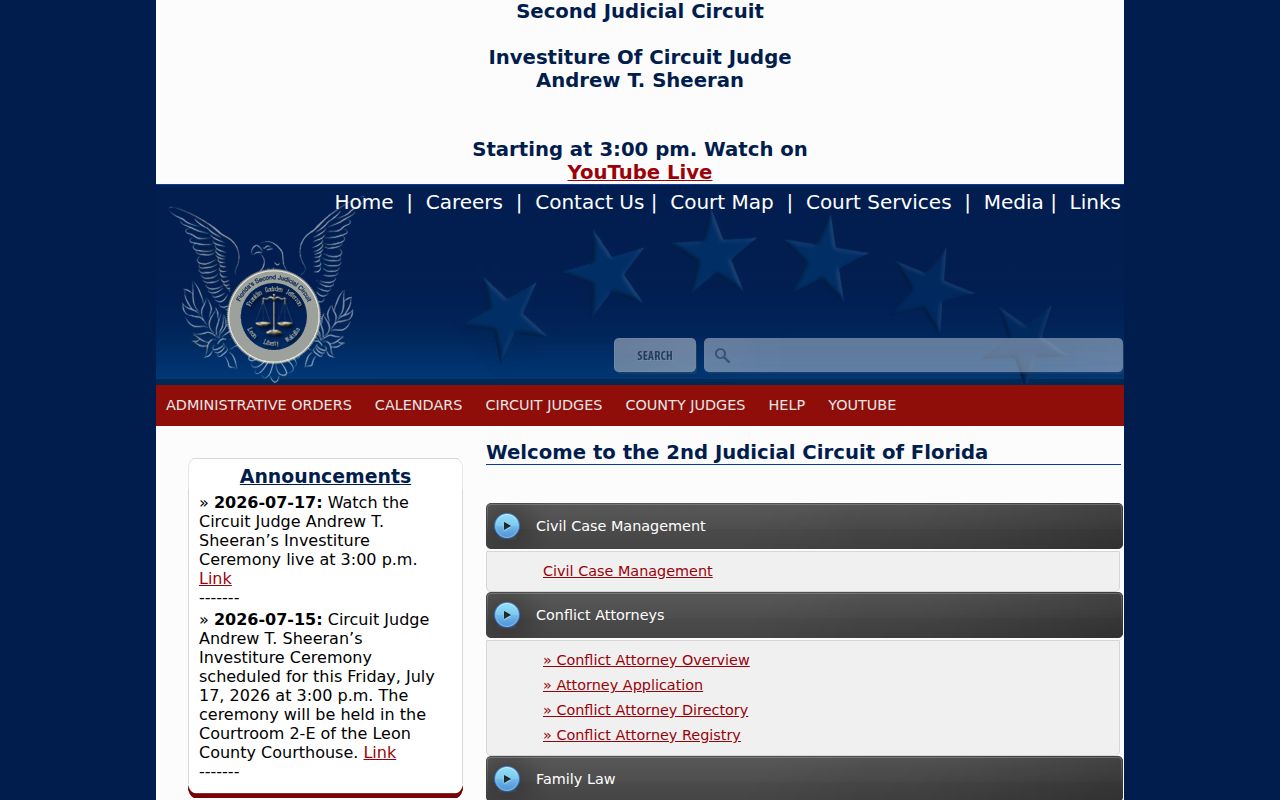
The circuit resource helps place local Wakulla County court files within Florida's regional trial-court structure.
Wakulla County Criminal Records by City
Wakulla County has only two incorporated municipalities: Sopchoppy and St. Marks. Neither official city site presents a robust independent police-record portal, city jail roster, or modern municipal criminal-case database. Start with the city clerk for ordinances and administrative records, identify the agency that made any arrest, use WCSO for county bookings, and use the Wakulla Clerk for filed misdemeanor or felony cases. The city pages preserve the different local routing and geography.
Sopchoppy Criminal Records
426 residents in 2020 · City Clerk records plus WCSO and Clerk routing
St. Marks Criminal Records
274 residents in 2020 · Agency identification matters near waterways and refuge land
Wakulla County Record-Holding Offices
A useful Wakulla County criminal history search ends at the office that created or filed the needed record. Use these official routes to request a source document or clarify a result. The office can explain its own retention, redaction, copy, and certification rules, but it cannot supply a different custodian's file.
Wakulla County Clerk
3056 Crawfordville Highway
Crawfordville, FL 32327
850-926-0300
Wakulla County Sheriff's Office
15 Oak Street
Crawfordville, FL 32327
Records: 850-745-7140
Florida Department of Law Enforcement
State criminal history, wanted-person records, personal review, and Florida registry access.