
Checking Criminal History in Sopchoppy
Begin by defining the record and its custodian. The official city site does not advertise a separate police-record portal, active-arrest blotter, city jail, or modern municipal criminal-case database. That absence makes a layered search more accurate than repeatedly searching City Hall for a county record. These five steps cover the documented routes.
- Ask the Sopchoppy City Clerk for an ordinance, commission, or city administrative record, describing the subject, date range, department, and preferred format.
- Identify the agency that investigated or made the arrest. If it was WCSO, request the incident or arrest report through its report line.
- Use WCSO Corrections for a current or recent Wakulla County Jail booking rather than looking for a Sopchoppy roster.
- Search the Wakulla Clerk portal for a filed County Court misdemeanor, criminal-traffic matter, or Circuit Court felony.
- Use FDLE for Florida-wide repository information or the agency's identity-confirmed personal-review route when reviewing your own record.
A hit at one level does not substitute for the others. An agency report explains an event, a booking record shows custody, and the court docket shows what prosecutors filed and how the judge disposed of it.
Records With the Sopchoppy City Clerk
The City Clerk is the custodian of Sopchoppy's official city records and serves as its records-management liaison. A focused request should name the record, relevant dates, city office, desired format, and a way to receive a cost or clarification notice. City commission materials, ordinances, and administrative files belong on this route.
The official Sopchoppy site lists City Hall's regular hours as Monday through Thursday, 8 a.m. to 4:30 p.m., and Friday, 8 a.m. to noon. The shorter Friday window matters when a requester plans a call or counter visit. City Hall's main number is 850-962-4611, and commission meetings are held at 105 Municipal Avenue.
That custodian role should not be stretched into criminal-record duties the research does not support. The clerk can help distinguish a municipal document from an outside agency record, but WCSO, another arresting agency, or the Wakulla Clerk may be the office that actually holds the requested criminal material.
Sopchoppy Police Department Records
No robust independent Sopchoppy Police Department records portal was identified on the city's official indexed pages. The safe course is to verify the present enforcement arrangement with City Hall and WCSO rather than infer that the word “city” guarantees a standalone department, records unit, or online blotter.
Ask who created the report. WCSO incident and arrest report copies route through 850-745-7142, while its Criminal Records status line is 850-745-7140. If FHP, FWC, FDLE, or another agency originated the matter, that agency remains the report custodian even when WCSO accepted the person into jail. This distinction prevents a common dead end: requesting an incident narrative from the booking office simply because custody occurred there.
City record questions
Sopchoppy City Hall
105 Municipal Avenue
Sopchoppy, FL
850-962-4611
WCSO reports and records
15 Oak Street
Crawfordville, FL 32327
Reports: 850-745-7142
Records: 850-745-7140
Sopchoppy City Hall Record Routes
The official City Hall gateway shows the municipal starting point for Sopchoppy records.
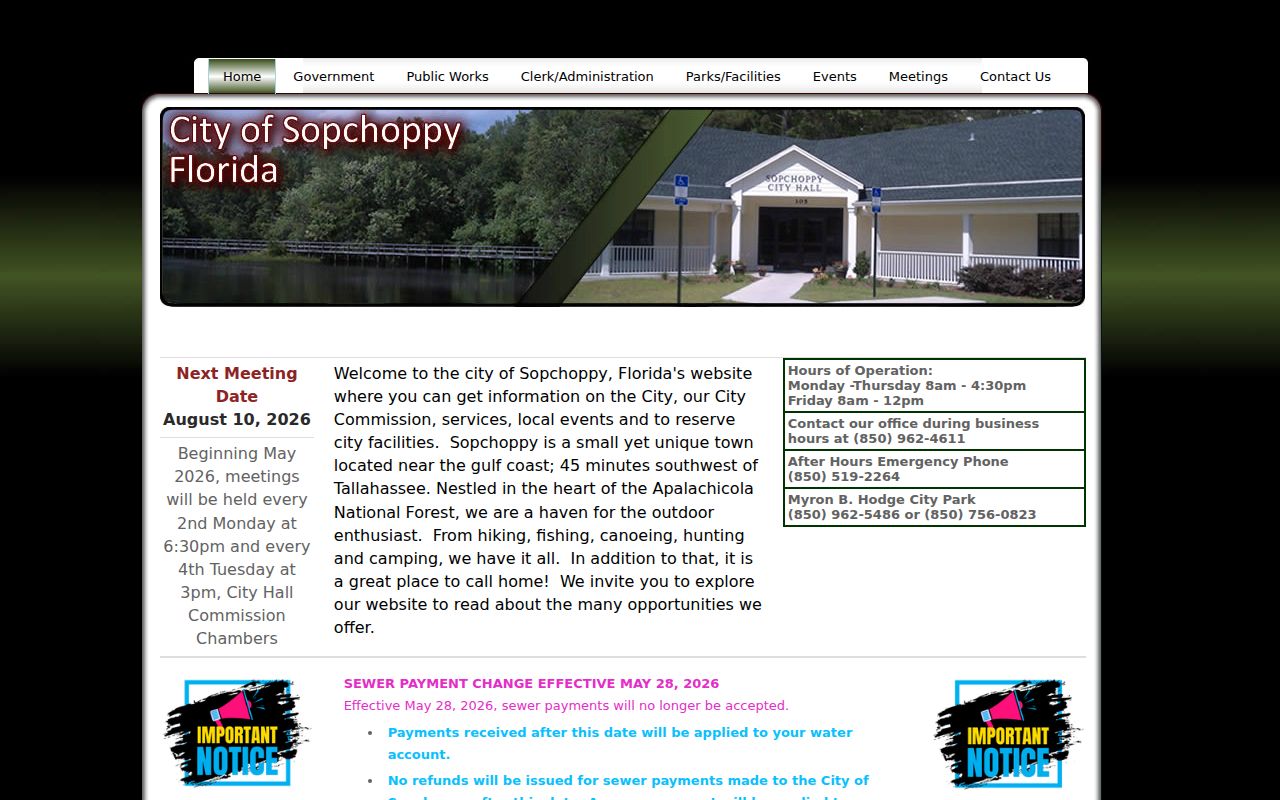
The city contact information helps with ordinances and administrative files, while criminal reports still follow the originating agency.
The city's government page identifies the local government channel and current municipal routing.
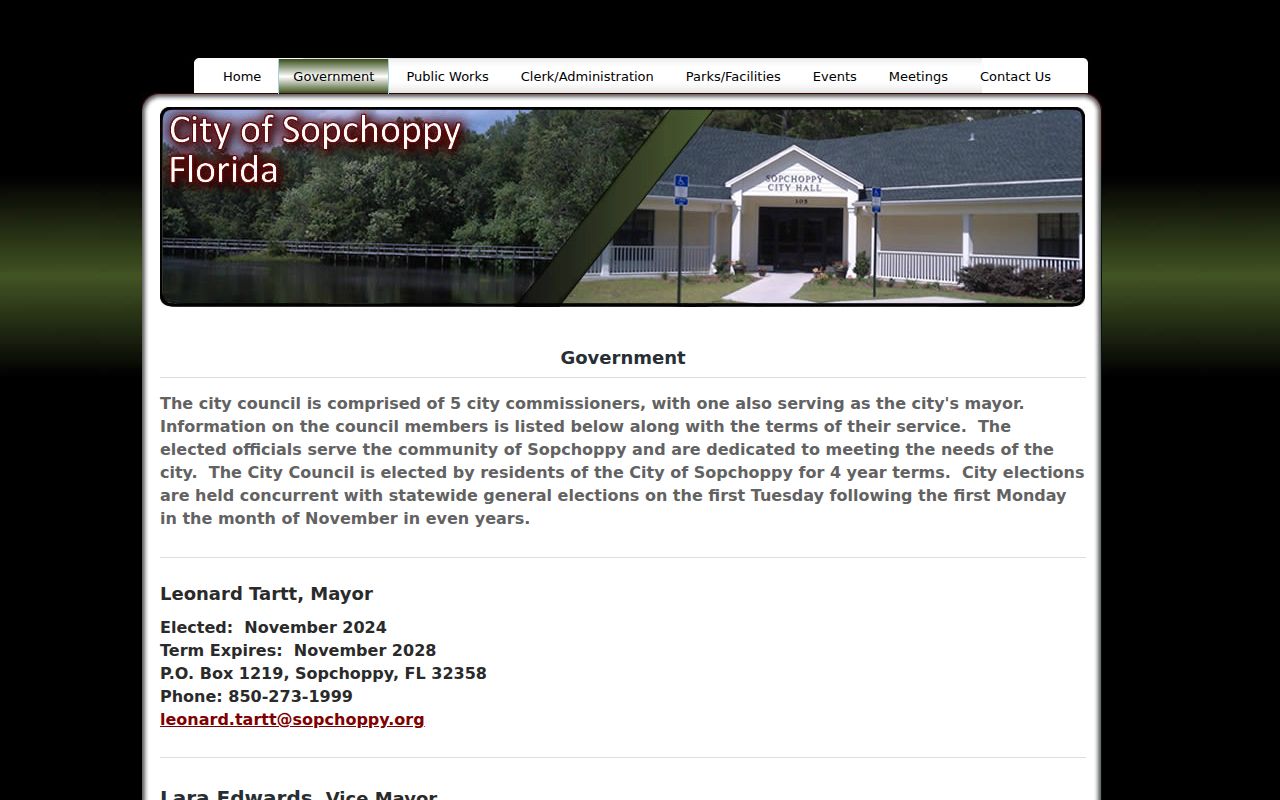
Use this city layer to locate municipal authority, not as proof that a separate police database or criminal court exists.
Sopchoppy Arrests and Bookings
Sopchoppy does not advertise a city jail or local inmate roster. When someone is taken to the Wakulla County Jail, WCSO creates the booking record at its Oak Street complex. The official corrections gateway is the place to check current or recent county custody, and the main WCSO line is 850-745-7100.
Booking ordinarily produces a booking number and time, custody status, alleged charges, arresting agency, bond information, fingerprints, and a photograph. Public display varies, and security, medical, victim, juvenile, and other protected information can be withheld. A booking charge remains an accusation. It can differ from the charge the State Attorney later files.
If the person is no longer on the current roster, ask WCSO whether the record reflects release, transfer, or an older booking. For a state-prison sentence or state community supervision, use the FDC Offender Information Search. Wakulla Correctional Institution is a state prison and is not the Wakulla County Jail.
No Sopchoppy City Jail
The city name on an incident location does not create a city custody system. WCSO's booking record is distinct from the arresting officer's report, and each updates on its own schedule. A person may appear in county custody before prosecutors open a court case.
When following a recent event, record the booking number, agency, booking date, and displayed charge. Then request the report from the named agency and search the Wakulla court portal by name after allowing for filing review. If the roster entry disappears, do not guess that the case ended. Release and transfer are custody events, while dismissal and conviction are court outcomes.
Municipal Court Records in Sopchoppy
No separate modern Sopchoppy municipal criminal-court database was found in official indexed sources. Verify any current local arrangement with the city. Filed misdemeanors and criminal traffic matters generally route to Wakulla County Court, while felonies route to Circuit Court. The Wakulla Clerk maintains both sets of case files at the county courthouse.
| Court Name | Wakulla County Court for misdemeanors and criminal traffic; Circuit Court for felonies. |
|---|---|
| Case Types Heard | Filed criminal charges from Sopchoppy are divided by Florida offense level, not merely by city boundary. |
| Case Lookup Channel | Wakulla Clerk online court portal, Clerk telephone at 850-926-0300, mail, or Courts Department counter. |
| What the Docket Shows | Case number, division, dates, status, charges, attorneys, hearings, docket events, disposition, sentence, and assessments when public. |
| Copies & Fees | Research lists $1 per court-record page, $2 per name or case search, and $2 per certification; confirm totals first. |
Search by exact name first, then narrow with case number, filing dates, or case type. Arrest date and filing date can differ. A same-name match should be checked against available identifiers and the charge-level disposition.
Searching a Sopchoppy Court Case
The Wakulla Clerk court portal is the documented online fallback when a Sopchoppy matter becomes a filed case. Its controls may change, but the research captured the core search routes.
| Search field | Best use |
|---|---|
| Last and first name | Start with exact spelling; use lawful variants separately. |
| Case number | Best choice when copied from a notice or prior docket. |
| Filed date range | Narrows results without assuming the arrest date is the filing date. |
| Case type | Limit to felony, misdemeanor, or criminal traffic when offered. |
A docket is an index of the prosecution, not the police narrative or discovery file. Images can be unavailable, redacted, archived, or confidential even when an event line remains public.
Where Sopchoppy Records Go
A local event can create several linked products. The investigating agency writes the incident or arrest report. WCSO creates a custody file if the person is booked. The State Attorney decides what to file, and the Wakulla Clerk opens the case. Qualifying arrest fingerprints and reported dispositions then move through Florida's reporting chain to FDLE.
Record flow: Originating agency › Wakulla County Jail and Courts › Florida Department of Law Enforcement
For a very recent Sopchoppy event, start with the arresting agency and WCSO. For the formal allegation and outcome, use the Clerk. FDLE's paid name search reaches Florida information beyond Wakulla, but it is not fingerprint confirmation and does not replace the local source documents.
Sopchoppy History and Record Jurisdiction
The official city history places Sopchoppy near Apalachicola National Forest and St. Marks National Wildlife Refuge.
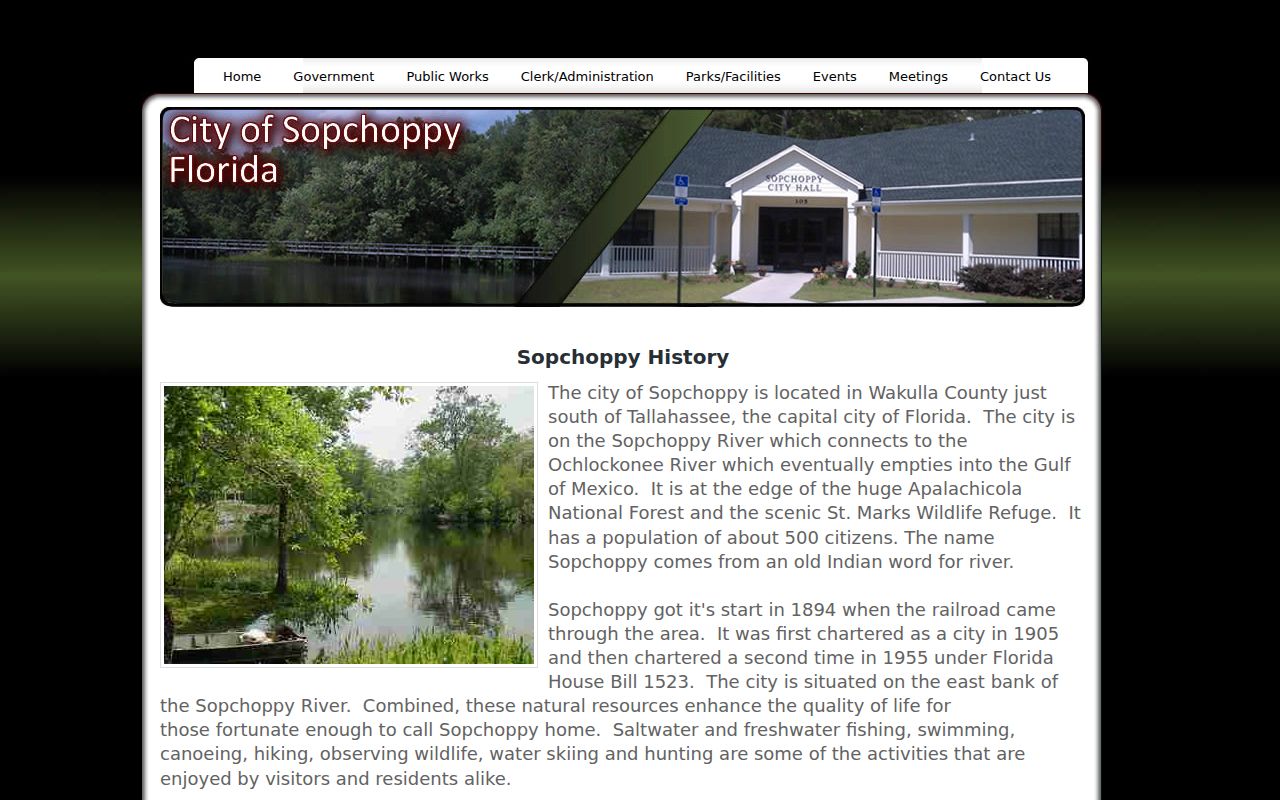
That setting helps explain why a record near Sopchoppy may originate with a county, state, conservation, or federal officer rather than a city office.
The City Clerk records page identifies the custodian for official Sopchoppy municipal material.
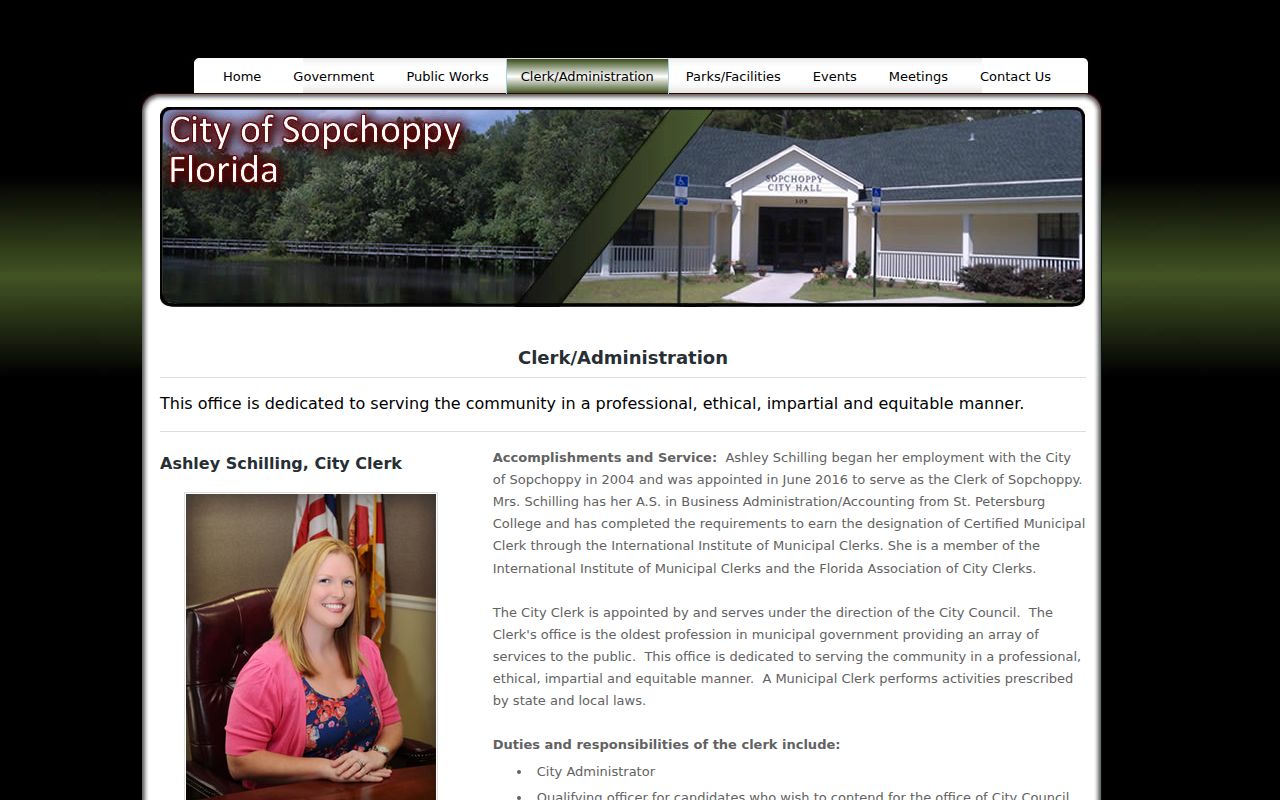
Separating that municipal archive from police, jail, and court files keeps each request with the office that can actually answer it.
Sopchoppy Ordinance or Criminal Case
A city ordinance, commission action, permit file, or administrative record remains a Sopchoppy clerk matter. An alleged violation that produces a filed misdemeanor, criminal-traffic case, or felony belongs in the Wakulla court system. The same event can therefore leave a city document and a county criminal case, but they are not duplicates.
Describe the document rather than asking broadly for a “criminal history.” If the goal is the rule itself, request the ordinance. If the goal is an officer's narrative, identify the arresting agency. If the goal is the filed charge or outcome, search the county docket. This plain split saves time and reduces mistaken no-record responses.
Public Access Rules in Sopchoppy
Florida grants broad rights to inspect and copy public records, but exemptions and court confidentiality still apply. A custodian should redact protected parts and produce the remainder when feasible. Active investigative material, juvenile information, victim and minor identifiers, protected addresses, sealed or expunged records, and sensitive personal data may be restricted.
Key Statutes:
Florida Public Records Law, Chapter 119 establishes inspection and copying rights subject to exemptions and lawful charges.
Florida Statutes section 943.053 governs dissemination of criminal-history information maintained through FDLE.
Florida Statutes section 943.056 provides a route to review and challenge Florida criminal-history information.
Florida court records also follow Rule 2.420. Public access does not turn an arrest into proof of guilt, and a missing online result does not prove that no record exists. Confirm identity, dates, agency, court, and disposition with the originating office.